
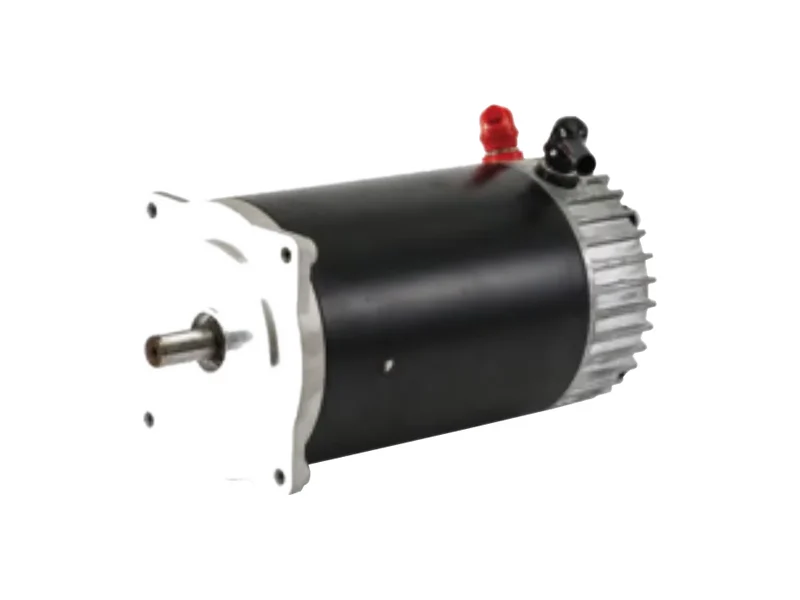
Two motors can share identical electrical specs and behave completely differently in the rain. The difference is the IP (Ingress Protection) rating — one of the most misunderstood lines on a motor datasheet.
How do you read an IP rating?
The first digit rates protection against solids, the second against water:
| Rating | Solids | Water |
|---|---|---|
| IP54 | Dust-protected (limited ingress, no harm) | Splashing water from any direction |
| IP67 | Dust-tight (no ingress at all) | Immersion to 1 m for 30 minutes |
IP54 says: dust may enter but won't interfere; splashes won't hurt it. IP67 says: sealed against dust entirely, and it survives being underwater — briefly.
Why not just make every motor IP67?
Sealing costs money and heat. An IP67 motor needs shaft seals, gasketed end caps and sealed terminals — and a sealed housing sheds heat more slowly, which can reduce the usable duty cycle. Specifying IP67 where IP54 suffices adds cost without adding life.
Which applications need which rating?
- Hydraulic power units (IP54): Most power packs live inside cabinets or vehicle bodies. Splash protection is enough; our hydraulic series (e.g. BT22FD-24V, BT16LT-12V) is IP54 as standard.
- Recovery winches (IP67 preferred): A winch motor on a front bumper gets pressure-washed, dunked in mud holes and forded through rivers. Sealed motors like the BT12000PLS and BTMS1210 are IP67.
- Tarpaulin drives (IP67 required): A tarpaulin motor rides on top of a truck body, fully exposed to weather for the vehicle's life. Bonte tarpaulin motors (BT09ZX/BT09ZXF series) are IP67 as standard.
What IP ratings do NOT cover
An IP rating certifies ingress protection under test conditions — not corrosion resistance, not high-pressure steam cleaning (that's IPx9K territory), and not permanent submersion. Salt-spray environments (marine winches) need attention to plating and hardware materials in addition to sealing; mention marine use when you request a quote.
The takeaway
Match the rating to the worst environment the motor will actually see: IP54 for enclosed installations, IP67 for exposed, washed or briefly submerged equipment. If your application sits in between — or beyond — tell our engineers what the motor will face, and we'll spec the seals to survive it.